In the heart of Tuscany

Florence
Florence is known worldwide as the “cradle of the Renaissance” and with its artistic and historical-cultural heritage attracts millions of visitors every year.
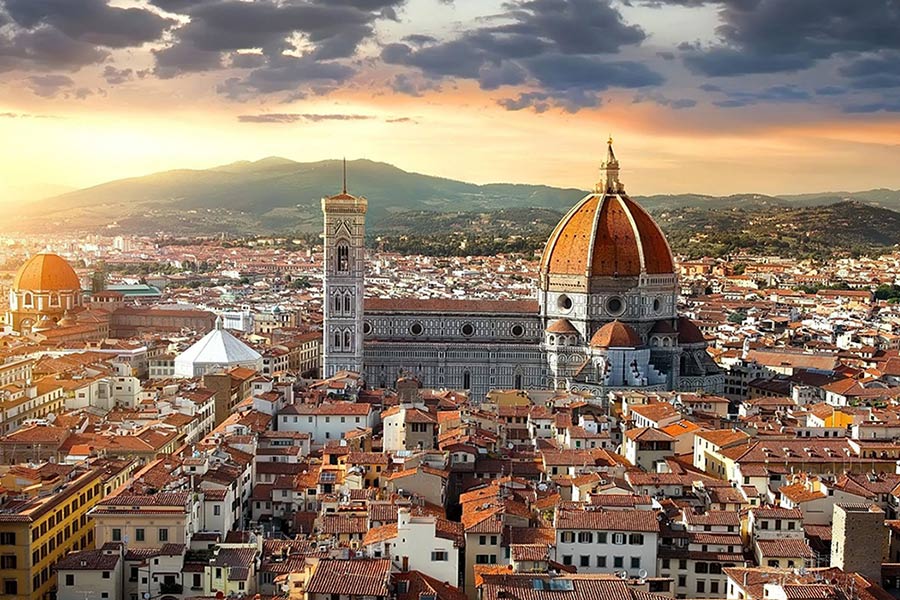
A visit to the city’s iconic symbol is a must, The Cathedral of Santa Maria del Fiore, whose foundation stone was laid in September 1296, designed by Arnolfo di Cambio. Construction took several centuries, with eminent artists succeeding one another, including Giotto, who primarily worked on the Bell Tower.
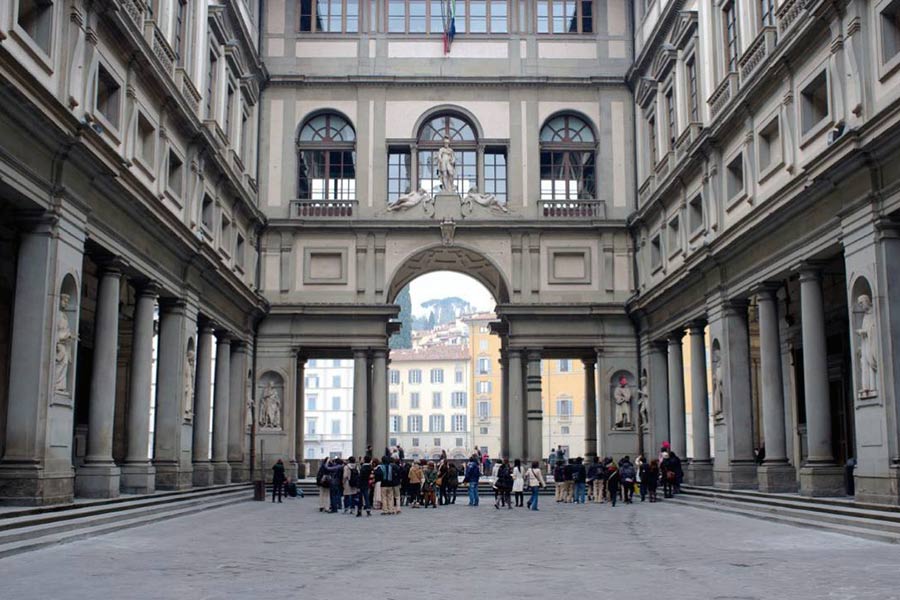
The Uffizi Gallery, built in the late 16th century by Giorgio Vasari on behalf of Cosimo I de’ Medici, was initially intended to be an office for Florentine magistrates, technicians, and merchants, hence its name.
Today the Uffizi is a museum that houses some of the oldest and most valuable art collections in the world. Among them are Giotto’s “Madonna on the Throne,” Paolo Uccello’s “Battle of San Romano,” Piero della Francesca’s “Federico da Montefeltro” diptych, and Botticelli’s “The Birth of Venus,” as well as several works by Leonardo da Vinci, one by Michelangelo, several by Raphael, and several by Titian and Caravaggio.
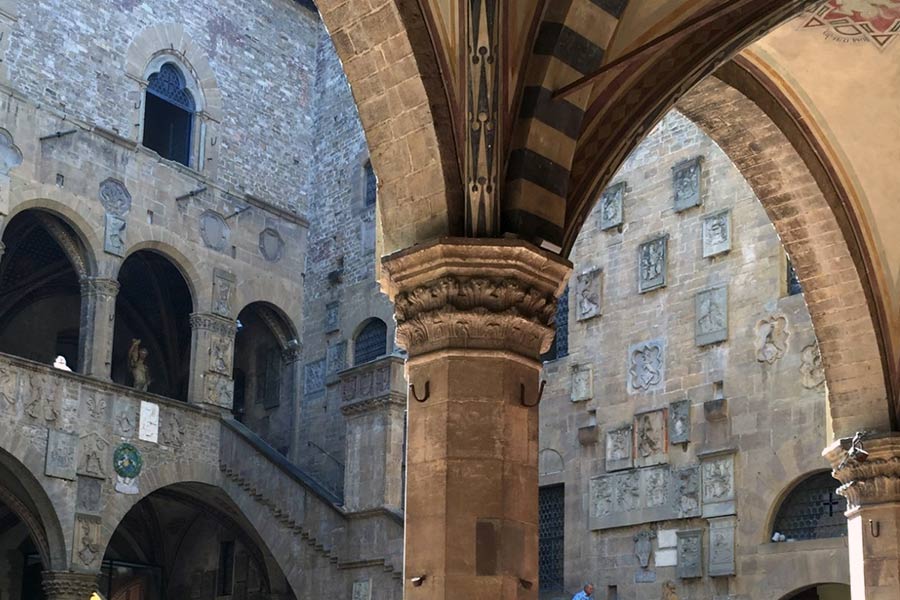
The Bargello is a National Museum located in the ancient Palazzo del Podestà in Florence, which, by royal decree of June 22, 1865, became the first Italian National Museum dedicated to the arts of the Middle Ages and the Renaissance. Inside, in addition to the palace itself, you can admire some of the most important sculptures of the Renaissance, including masterpieces by Donatello, Luca della Robbia, Verrocchio, Michelangelo, and Cellini.
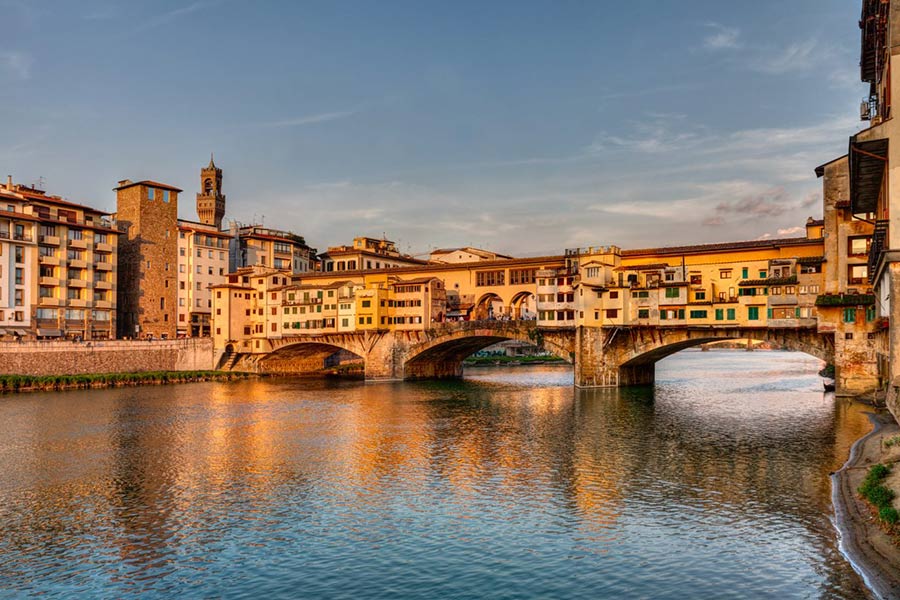
Another monumental symbol of Florence is the Ponte Vecchio, which until 1218 was the only bridge spanning the Arno. The current bridge was built in 1345 after the Arno destroyed the previous one. Initially used for merchants’ shops (butchers and greengrocers), it was later converted to accommodate artisans and goldsmiths.
But Florence is not just museums and monuments; Visitors can savor its ancient atmosphere, rich in cultural stimuli, simply by strolling through its alleys, even in the lesser-known Oltrarno, which still preserves the spirit of the city almost intact.