In the heart of Tuscany

MEDIEVAL CASTLES OF CASENTINO
Distance from Villa Catarsena: 15 km (Poppi Castle)
The Casentino Castles and the Counts Guidi Family During the Middle Ages, the Casentino Valley was controlled by the powerful feudal family of the Guidi Guidi Counts, formerly Palatine Counts of Tuscany around the year 1000. The Guidi Counts controlled Casentino and Romagna until the late Middle Ages, creating a dense network of castles distributed almost uniformly throughout the area and positioned at strategic points of access to the valley and at the crossroads of the smaller valleys that make up the territory. Anyone staying in Casentino should dedicate at least two days to visiting the medieval castles.
Chiusi della Verna Castle The history of Chiusi is linked to the name of the noble Catani family. The fiefdom of Chiusi was donated in 967 by Emperor Otto I to Goffredo di Ildebrando Catani and included the communities of Badia Tedalda, Pieve Santo Stefano, and Verghereto in the Tiber Valley, and the Casentino courts of Chitignano, Compito, Sarna, and Vezzano.
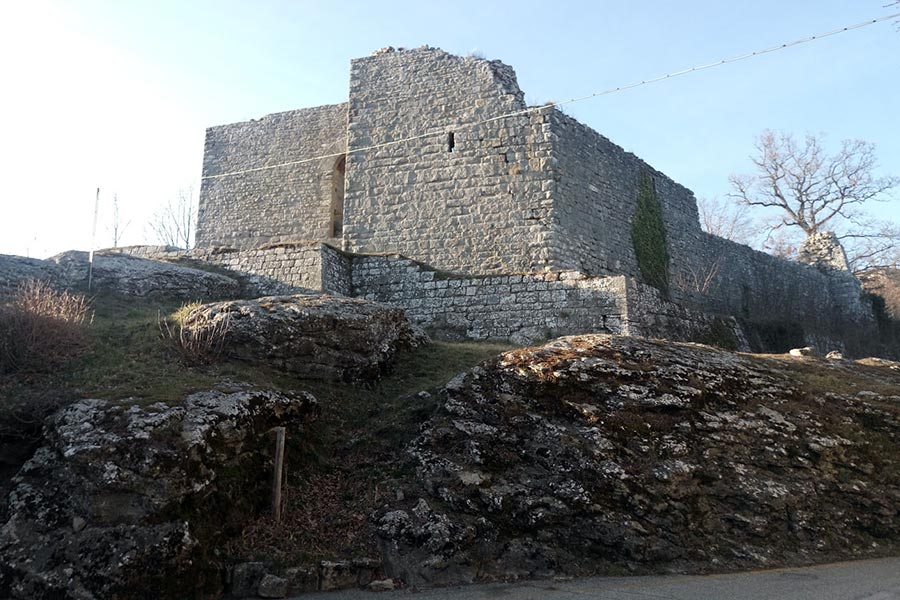
The ruins of the castle, located at the center of the fiefdom, are easily reached by turning right from the road that leads from the town of Chiusi della Verna to the Franciscan Sanctuary.
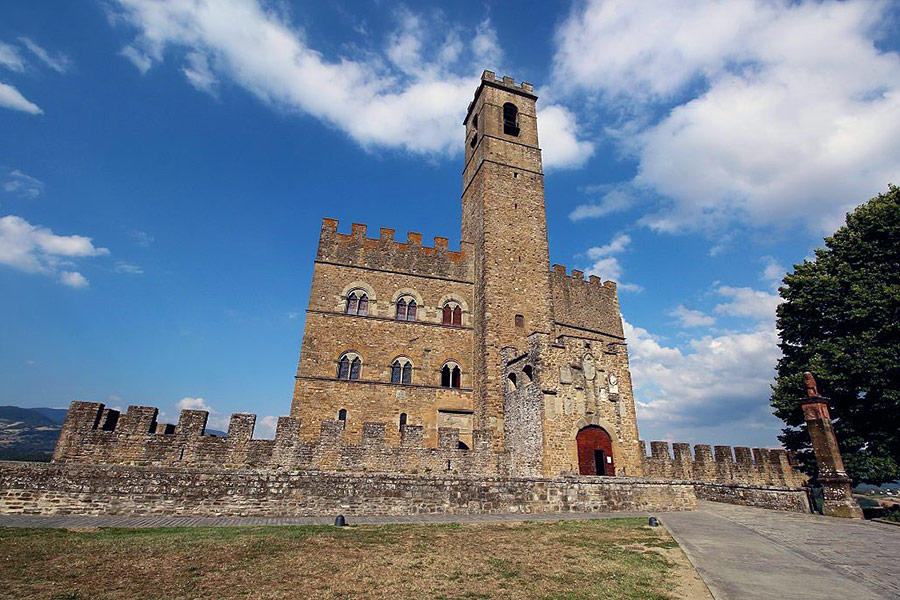
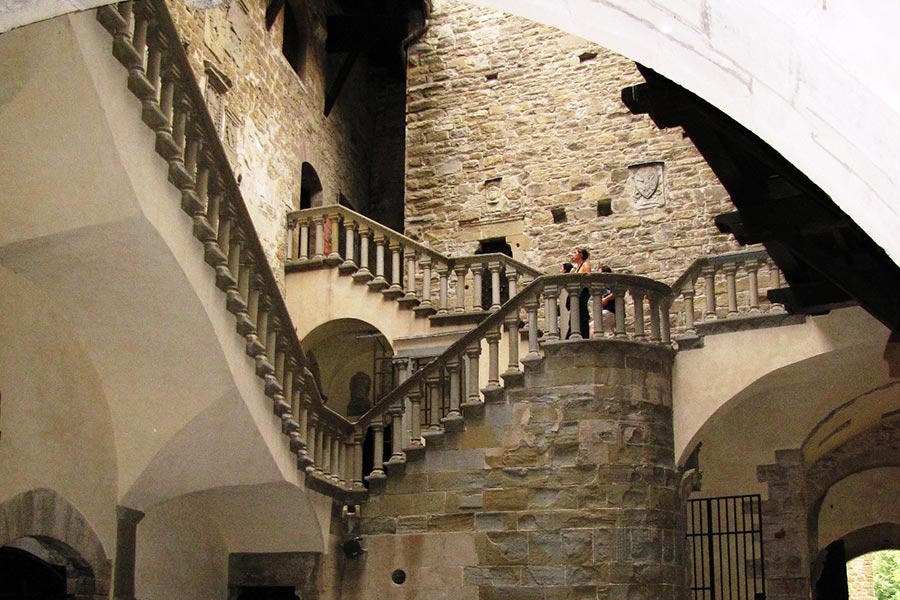
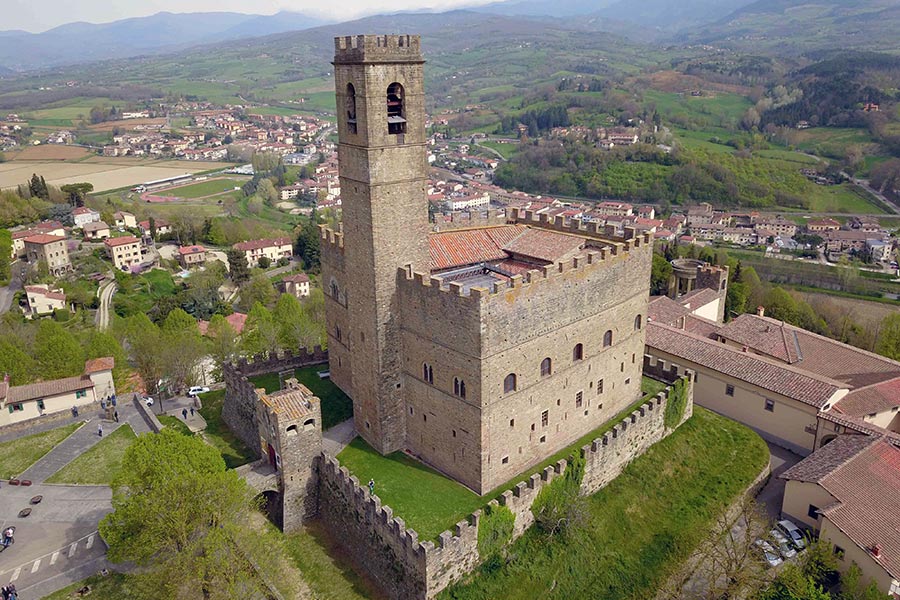
Poppi Castle Owned by the Counts Guidi family and better preserved than other castles, it is in a very picturesque location, at the top of the town of Poppi, one of the most beautiful villages in Italy. Worth seeing are the internal courtyard, the large frescoed halls, the staircase, the eccentric column, and the family chapel with frescoes by Taddeo Gaddi, a pupil of Giotto. Often the site of exhibitions and cultural events during the summer, we recommend attending the fireworks display, usually held on the third Saturday of July, during the twinning celebrations.
Romena Castle It must have had three rings of perimeter walls, interrupted by square towers, and walkways for rest, control, and patrol. The highest part of the hill was not used as a traditional parade ground but as a shelter for animals, men, and supplies in times of need.
It was the feudal seat of one of the most powerful branches of the Guidi counts and was captured by the Milanese following Niccolò Piccinino, then donated to Neri Capponi during the reign of Grand Duke Cosimo. It gradually lost importance and in the 18th century was sold in a state of near ruin by the Goretti Flamini, the current owners.
The Florentine Palace in Stia Destroyed in 1440, it was purchased in the late 19th century by Carlo Beni who, following the models of the collectors’ palaces of the time such as Palazzo Stibbert and Palazzo Davanzati in Florence, had it rebuilt in an eclectic Romantic style with Neo-Gothic touches.
It houses the Ornithological Museum and the Museum of Contemporary Art. Its halls often host cultural events. Also near Stia are the castles of Porciano and Papiano.
Castel San Niccolò Castel San Niccolò is located above Strada in Casentino, on the right bank of the Solano Valley, just a few kilometers from Poppi.
According to legend, its name derives from the fact that Poggio di Ghiazzuolo was haunted by demons and that they were driven out by a pilgrim who carried a relic of Saint Nicholas, Bishop of Myra. Already owned by the Guidi counts in 1253, it remained so until 1348, the year of the popular revolt against Count Galeotto. After passing to the Florentines, the castle was transformed internally and maintained its architectural layout until the 18th century, when it became a farmhouse. In the late 1960s, it was purchased by Giovanni Biondi, who restored it.
Montemignaio Castle From Strada in Casentino, you can reach Florence by passing through Borgo alla Collina, following the Strada Statale (state road) or taking the road to Montemignaio.
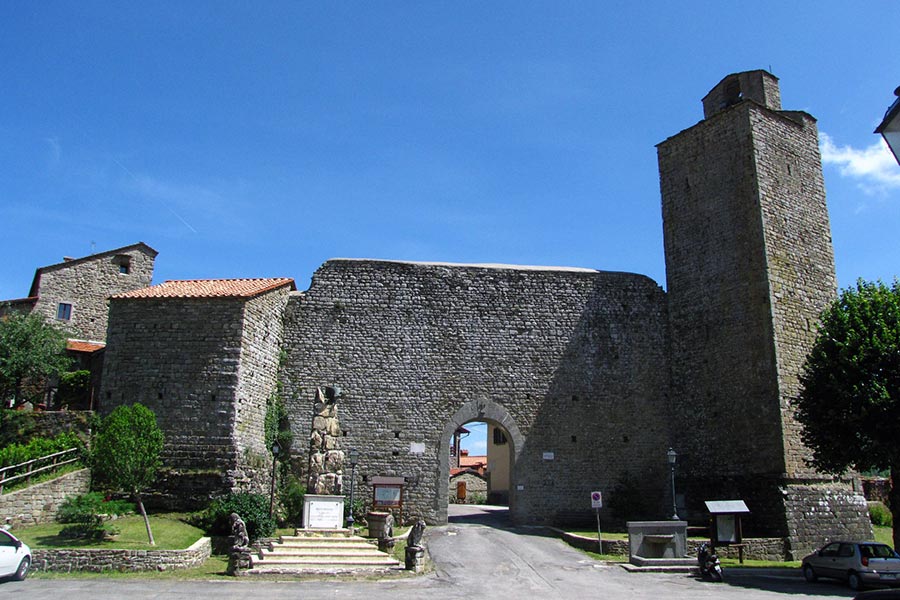
Montemignaio Castle was the ancient manor of the Guidi Counts. From the remaining foundations, it can be seen that the castle walls were rectangular in shape and that the fortress was accessed through four gates. The gate that now leads into the castle is recent; it was opened for the convenience of the inhabitants who lived within the walls. Here, as in Romena, not far from the castle is the Romanesque parish church of Santa Maria Assunta.